We welcome questions and comments about our products and services, you can reach us as follows:
Versaperm Limited
10 Rawcliffe House
Howarth Road
Maidenhead
Berkshire
SL6 1AP
UK
Tel UK: +44 (0) 1628 777668
Tel USA: +1 (617) 855-7477
e.mail: webcontact@versaperm.com
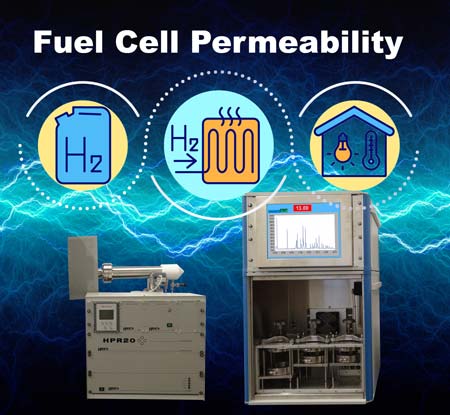 Vapour permeability is the ability of a material or membrane to allow water vapour to pass through it—is a critical property in proton exchange membrane (PEM) hydrogen fuel cells. It directly affects water management, efficiency, durability, and overall performance. Here’s why it matters:
Why vapour permeability is important in hydrogen fuel cells
1. Proper water vapour management in the membrane
PEM (Proton-Exchange membrane) fuel cells rely on a hydrated polymer membrane (for example, Nafion) to conduct protons from anode to cathode.
A membrane and surrounding components with appropriate vapour permeability help maintain optimal humidity balance - allowing excess water to diffuse out while retaining enough moisture for proton conduction.
2. Avoiding cathode flooding
Water is generated at the cathode as hydrogen and oxygen react.
If water cannot diffuse or evaporate through vapour-permeable layers, it accumulates in the catalyst layer and gas diffusion layer (GDL), causing:
Controlled vapour permeability ensures water can escape as vapour rather than flooding the electrode.
3. Improving durability and thermal stability
Membranes exposed to uneven drying and hydration cycles experience mechanical stress, causing:
Materials with stable vapour permeability regulate moisture across temperatures and load conditions, preventing these damaging cycles.
4. Enhancing overall efficiency
When humidity is balanced:
All of this yields higher fuel cell efficiency and stable power output.
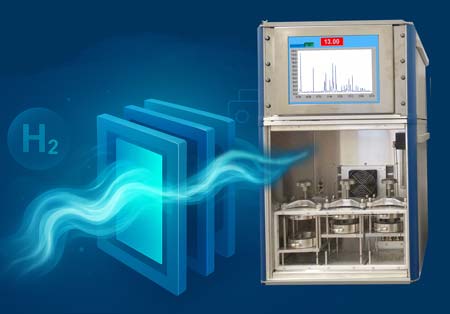 5. Impacts on system design and components
Several layers in the fuel cell depend on tuned vapour permeability:
5.1 Membrane
Needs controlled permeability to maintain hydration without losing too much water.
5.2 Gas diffusion layers (GDL)
Designed to allow:
5.3 Bipolar plates and seals
Must prevent water loss to the environment while allowing internal redistribution of vapour.
6. Cold-start and freeze performance
In cold climates, vapour permeability influences:
Materials that allow gradual vapour diffusion reduce internal ice formation.
Summary
Vapour permeability is essential for hydrogen fuel cells because it allows the system to balance water content, prevent flooding or drying, and maintain high proton conductivity, efficiency, and durability. Water management is one of the central engineering challenges of PEM fuel cells, and vapour permeability is a key property that enables stable operation over a wide range of conditions.
Click here for Wikipedia's fuel cell page
Click here for press release on Fuel cell vapour permeability and measurement